Showing posts with label David Brin. Show all posts

9/24/2012

Marvel's Thor in Arabic - Not a God

This post is also available in Macedonian
- на македонски на Блогспот: Марвеловиот Тор на арапски - не е бог
- на македонски на Блогерај: Марвеловиот Тор на арапски - не е бог 
 
Egyptian journalist and blogger Azza Moghazy related an interesting inter-cultural fact regarding the Arabic translation of Marvel Comics about Thor, which was subject to religious censorship:
When translated into Arabic we never learned that he was an old Nordic god. The Arabic translation introduced Thor as a fighter not a god...
By the way here is a discussion in an Arabic forum for comics about Thor. most of the participants agreed that Thor comics mustn't be translated or published in Arabic because it recognizes a pagan god.
The following scan of an Arabic Thor comics is from the that site, Arabcomics.net. According to Azza, the translation is:  "Thor .. the (master) of thunder. The legend becomes true." The comics was translated and published in Lebanon and distributed all over the Arab world (22 countries with Arabic as a native language).

Arabic version of Marvel's Thor
Monotheism--denial of existence of all other gods but one--is one of the fundamental common tenant of Judaism, Christianity (Old Testament, the First Commandment, Exodus 12: 1-17 & Deuteronomy 5: 6-21) and Islam (Qur'an chapter 47:19, 28:70). People living in secular societies might find it hard to imagine how such doctrines might be applied literally to the extent of controlling or modifying access to artworks or other products. There's no evidence that uncensored comics using stories about ancient gods as templates for superheroes lead to revival of the polytheistic religions of old, either Norse or Mediterranean (as in DC's Wonder Woman, Teen Titans, etc.).

My own experience as a kid who grew up under what we called socialism and what westerners call communism or totalitarianism in 1980s Yugoslavia is also censorship-free, at least concerning superhero comics. Even though the system was officially promoting atheism, there was no widespread persecution of religious people - in fact, "national" religious institutions such as the Macedonian Orthodox Church and Islamic Community were part of the system. Neither did this official atheism (denial of all gods) require censorship or altering of stories about religious figures, pagan or monotheistic. Especially in comics. World heritage and local ancient mythologies and the pagan past were also freely re-used by domestic authors, both state-supported and alternative. (Note: Experience of Yugoslav Communism was much different in degree of repression and censorship from the countries of the Warsaw Pact.)

--- Elsewhere in Sci-fi ---

Norse, Germanic, Anglo-Saxon mythology is often used by American science fiction writers, due to the obvious links of that culture to England. Two of the most interesting works based on exploring the links between the Norse ("Viking") and Arab/Middle East cultures and mythologies also use the same word in the title:
  • Eaters of the Dead by Michael Chrichton, the basis for the film The 13th Warrior, depicting contact and cooperation between Vikings and a man coming from the Caliphate of Baghdad. The film has its moments, but the book is much richer in (pseudo-historic and historic) details which make it somewhat juicier.
  • The Life Eaters - graphic novel written by David Brin with art by Scott Hampton, based on and expanding the storyline of Brin's amazing novella Thor Meets Captain America (Hugo winner).

11/22/2009

Star Wars Purge: Seconds to Die – Comics Review

Star Wars: Purge - Seconds To Die One-Shot
by Ostrander, Hall, Lei/McKenna
Dark Horse Comics (November, 2009)


Star Wars: Purge - Seconds to Die
This slim (22 pages) volume based on the script by John Ostrander attempts to provide a somewhat novel perspective of the events from Revenge of the Sith as part of the relentless effort of the Star Wars franchise to presents a coherent narrative for adults while remaining within the limits of an overblown children story.

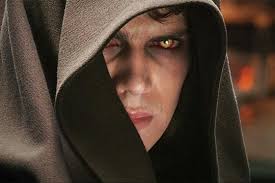
It looks like one of the main purposes of Seconds to Die is to remind the readers of the iconic portrait of hooded-gorgeous-Anakin-gone-bad from Episode III, which appears at least three times.

The yarn about Sha Koon, the last Jedi that survived the onslaught at the end of Clone Wars and then decided to incite a suicidal duel with Vader would have been interesting if her femininity was not totally inconsequential. She’s depicted as a member of species with a head akin to the Predator (without the cool gear), and her body most resembles a very tall human male. The application of gender mainstreaming in this case means blotting out any gender specifics. This comes as no surprise, as lack of sex has been the staple of the franchise since the Phantom Menace (i.e. the removal of the dynamics between Harrison Ford's Han Solo and Carrie Fisher's Leia).

The final battle is quite lame. The Cthons, “primitive” people who help Sha Koon against Vader have “some useful bits of technology” like an “electroshock net.” However, they first attack the lightsaber-armed Sith lord naked and weaponless, and he cuts them to shreds. The utter absence of projectile weapons, especially firearms, within the Star Wars universe has always seem perplexing, and can only be explained by the notion that these stories remain within the framework of fairy tales for kids that need not develop critical thinking skills.

At the end, the conclusion raises this comics to a new level of lameness. The stabbed Sha Koon has a two-page “flashback”—a vision—with a short recap of the adventures of Luke Skywalker, including the death of the Emperor, and dies “at peace.”

This “comforting” epilogue brings to mind the lucid analysis by David Brin in his legendary essay "Star Wars" despots vs. "Star Trek" populists, objecting to absolving Vader from guilt of destroying billions lives during his career because he showed repentance by not killing his own son.

Fortunately, Seconds to Die is just a one-shot. Even though the technical execution of the script and the drawings by Jim Hall (pencil), Alex Lei, Mark McKenna (ink), and Ronda Pattison (color) is of quite high quality, one can only go so far chewing the cud instead of injecting some logic, or creativity into the stale blood of Star Wars.